Rogue 3.6
The Rogue that spread across the world's Unix machines
> Enter the dungeonDate of birth1980 (Rogue) · 3.6 in 1981
CreatorsToy · Wichman then Arnold
LanguageC ~14,000 lines
PlatformUnix + curses VAX, terminals
Lineage
Rogue has no parent game. Michael Toy and Glenn Wichman wrote it at UC Santa Cruz around 1980, after Colossal Cave Adventure, the mainframe Star Trek game and Dungeons & Dragons, on top of Ken Arnold's curses screen library.
3.6 is the version that first spread widely (1981). It is the common root of the family: Super-Rogue and Advanced Rogue were built from its code, while the 5.x line (Rogue 5.4, Rogue PC) continued at Berkeley. See the family tree.
Credits
| Michael C. Toy | Co-creator, main programmer |
| Glenn R. Wichman | Co-creator, game design, named the game |
| Kenneth C. R. C. Arnold | Author of curses, later co-developer |
| Roguelike Restoration Project | Preserved this source (rogue3.6 @ f36912c) |
Screenshots
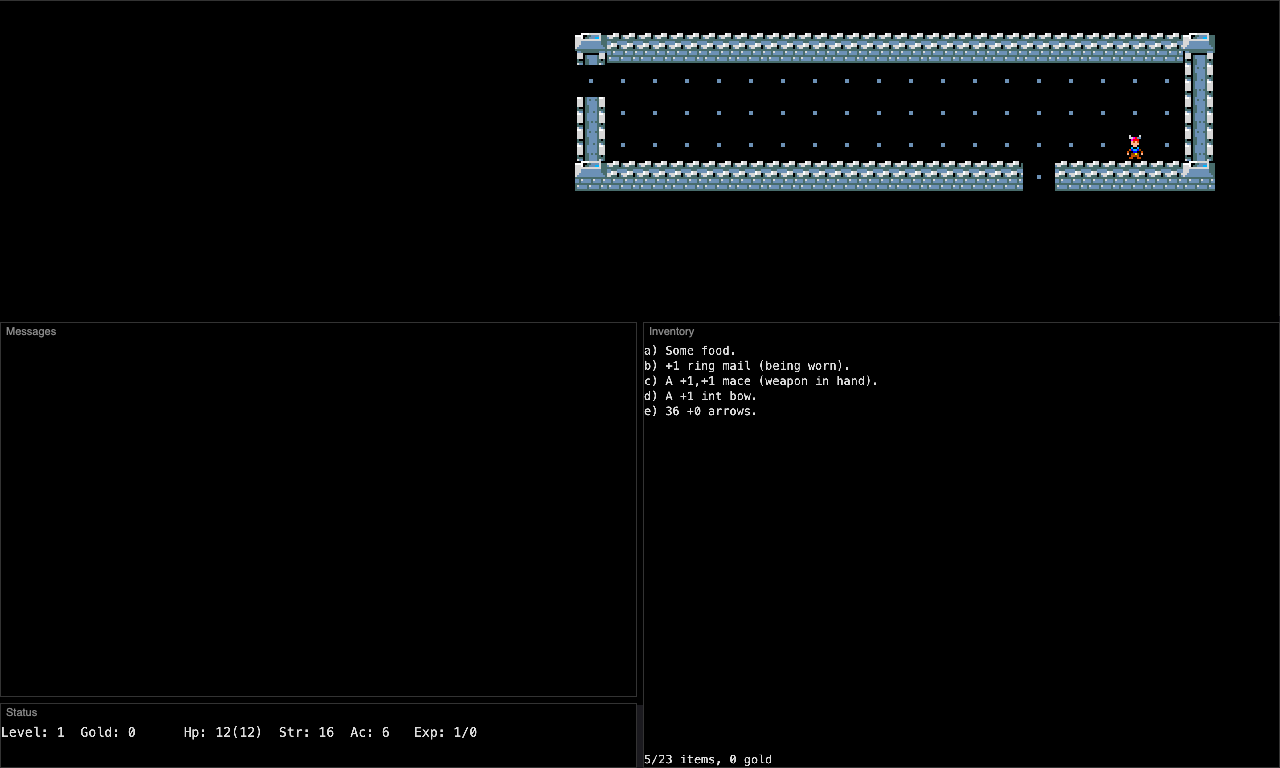
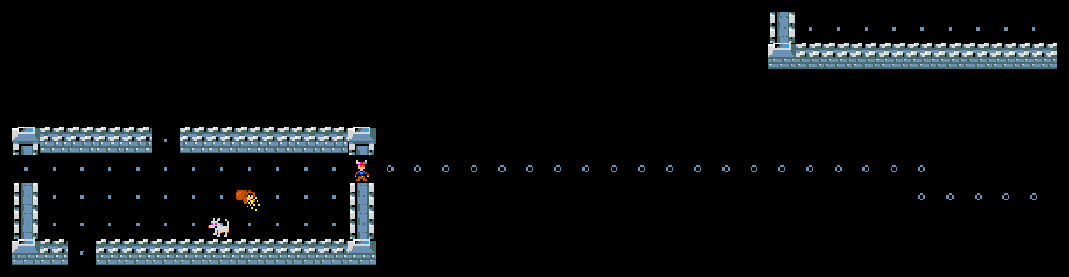
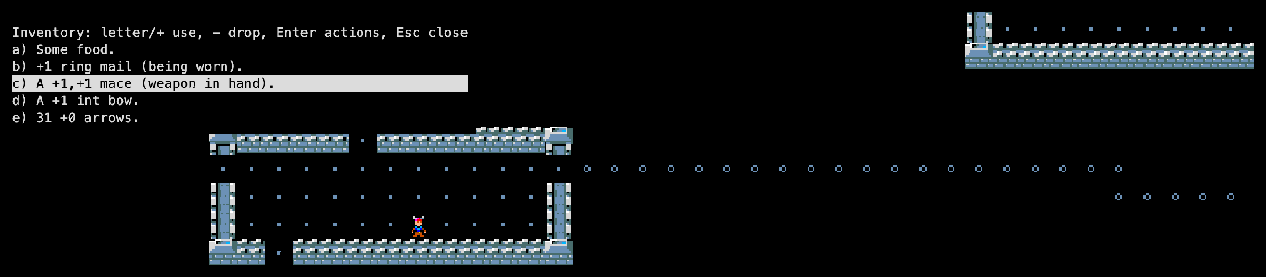
# (drawn as rings) leading away.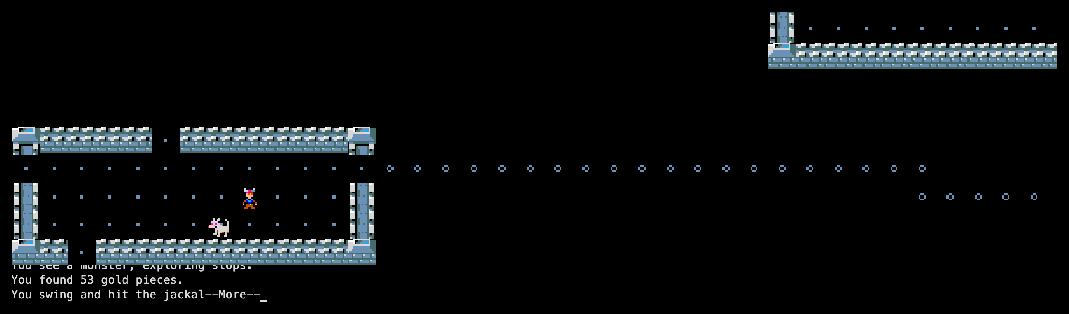
Trivia
- Dennis Ritchie joked that Rogue was the biggest waste of CPU cycles in history. (Wikipedia)
- “The name ‘Rogue’ was my idea,” writes Glenn Wichman in his history of the game. (wichman.org)
- Rogue went out with BSD Unix and spread over ARPANET to universities everywhere. (Wikipedia)
- The source of 3.6 checks the machine's load:
too_much()can refuse to start the game when the shared computer is busy, unless you are the wizard or the author: “Sorry, … but the system is too loaded now. Try again later. Meanwhile, why not enjoy a slime-mold?” (source:main.c) - 3.6 still uses Dungeons & Dragons monsters — floating eye, rust monster, umber hulk, xorn, quasit — that the later 5.x versions replaced with new ones like the aquator and xeroc. (source:
init.c, compared with Rogue 5.4)
What's unique
- The template for a genre: random levels, permanent death, items identified by use, a letter for every monster.
- The D&D bestiary: unlike later versions, the monsters are straight from the Monster Manual.
- Small and pure: one fighter, one goal (the Amulet of Yendor on level 26), no shops, no classes, no spells.
Code dive
- Language: K&R C, about 14,000 lines. Monster and item tables are plain arrays in
init.c. - Environment: BSD Unix on DEC VAX computers, played on video terminals through curses.
- Wizard mode is started with an empty first argument and a password compared against a
crypt()hash. - This port: the same C through a curses shim, to X11 and to WebAssembly. Source: memmaker/rogue3.6.
Stats
| Thing | Count | Notable ones |
|---|---|---|
| Classes | 1 | A fighter fresh from the guild. |
| Monsters | 26 | Giant ant, floating eye, violet fungi, invisible stalker, mimic, purple worm, rust monster, umber hulk, xorn, yeti — one per letter. |
| Potions | 14 | |
| Scrolls | 16 | |
| Rings | 13 | |
| Wands & staffs | 14 | |
| Weapons | 12 | |
| Armour | 8 | |
| Levels | 26+ | The Amulet is on level 26. |
| Spells, skills | 0 | Magic lives in items only. |
Manual
“A Guide to the Dungeons of Doom” by Michael C. Toy, shipped with the source: read it here (text).
Getting started
- Open the game: you start in a room with food, ring mail, a mace, a bow and arrows.
- Move with hjklyubn or the arrows; walk into monsters to fight. x explores.
- Enter lists every command; i is the inventory.
- > takes (or walks to) the stairs down.
- All keys: the in-game guide.
Help
No walkthrough exists: the dungeon is new every game. Tips:
- Fight in corridors and doorways; rest to full hit points between fights.
- Keep the armour off near a rust monster. Don't melee a floating eye: its gaze freezes you.
- Test unknown potions and scrolls when you are healthy and alone.
- More: RogueBasin and the manual.
Cheats
- Wizard mode (^D/^U change level, ^T teleport, ^F show the map) needs a password and a special command line: not reachable in this build.
- Save scumming: Export save before a risk, Import save after a death.